Digital Marketing Strategies Used by Leading Companies in India
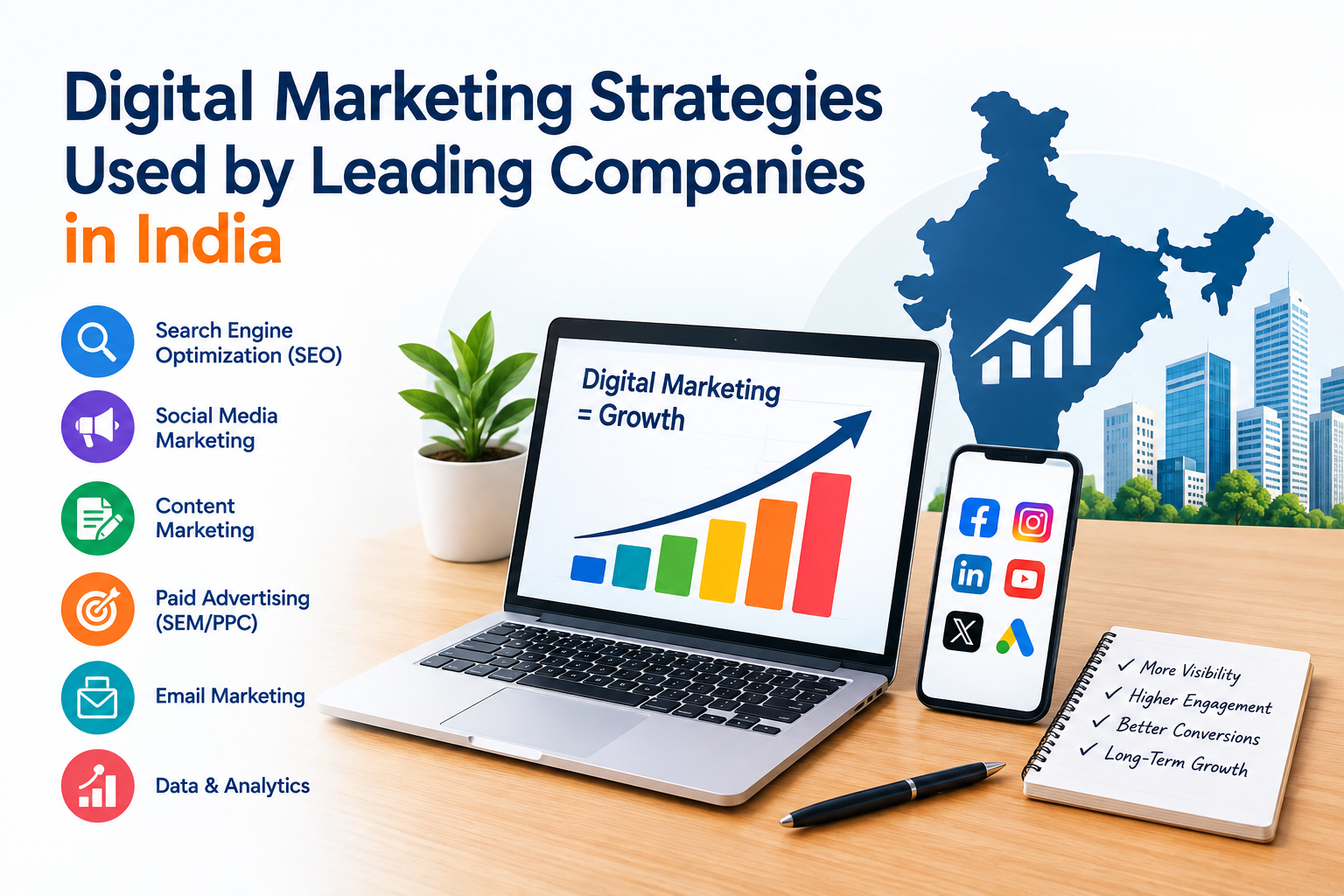
What makes some Indian companies consistently visible online while others struggle to attract customers? The answer is usually not a single marketing channel. Digital marketing strategies used by leading companies in India combine search, content, social media, paid advertising, data and customer experience to reach people at different stages of the buying journey.
For businesses operating in India's competitive digital market, the right strategy depends on the target audience, industry, location, budget and business goals. A startup may focus on SEO and content, while an e-commerce brand may combine Google Ads, social commerce, influencer campaigns and remarketing.
What Are Digital Marketing Strategies?
What is digital marketing and why is it important in India?
Digital marketing is the process of promoting a business, product or service through online channels such as search engines, websites, social media, email, messaging platforms and paid advertising.
In India, digital marketing allows businesses to reach customers beyond their immediate geographical area. It also makes it possible to measure important actions such as website visits, enquiries, purchases, leads and advertising returns.
A strong strategy connects marketing activity with a specific business objective rather than simply increasing online activity.
How do Indian companies use digital channels to reach customers?
Leading businesses generally use multiple channels together. SEO can attract people searching for information, paid advertising can capture immediate demand, while social media and content can build familiarity and trust.
The combination is important because customers rarely make a purchase after interacting with only one marketing channel.
How is digital marketing different from traditional marketing?
Traditional marketing relies heavily on channels such as newspapers, television, radio and outdoor advertising. Digital marketing provides more opportunities for targeting, testing and measuring results.
This does not mean traditional marketing has become irrelevant. Many successful Indian businesses combine both approaches depending on their audience and objectives.
Why Is Digital Marketing Important for Indian Businesses?
How is Indian consumer behaviour changing?
Indian consumers increasingly research products, compare prices, read reviews and look for recommendations online before making decisions.
Businesses therefore need useful information available at the right stage of the customer journey. A well-optimized website can answer questions before a potential customer contacts the company.
Why are mobile and social media important?
Mobile devices are central to online activity in India. Businesses need websites, landing pages and campaigns that work well on smaller screens.
Social platforms also provide opportunities for brands to demonstrate products, share educational content, answer questions and develop communities.
Can digital marketing reach Tier 1, Tier 2 and Tier 3 cities?
Yes. Search engines, social networks, video platforms and messaging channels allow businesses to reach audiences across different Indian markets.
Regional targeting can make campaigns more relevant, particularly when businesses use local search optimization, regional languages and location-specific content.
What Are the Top Digital Marketing Strategies Used by Leading Companies in India?
How does SEO help Indian companies?
Search engine optimization helps businesses improve their visibility for relevant searches. Leading companies generally combine technical SEO, useful content, internal linking, local SEO and authority-building activities.
Modern SEO also needs to consider AI-powered search experiences. Businesses can structure content around clear questions and direct answers so that important information is easier for both users and search systems to understand.
When should a business use Google Ads and SEM?
Search engine marketing is useful when a company wants to reach people who already demonstrate purchase intent.
Search, display, shopping and remarketing campaigns can serve different purposes. However, businesses should monitor conversions rather than judging campaigns only by clicks or impressions.
How does social media marketing support business growth?
Social media can increase brand awareness, engagement and customer interaction. Indian businesses commonly use Instagram, Facebook, LinkedIn and YouTube depending on their audience.
For example, a B2B technology company may prioritize LinkedIn, while a consumer brand may receive stronger engagement through Instagram and YouTube.
Why is content marketing important?
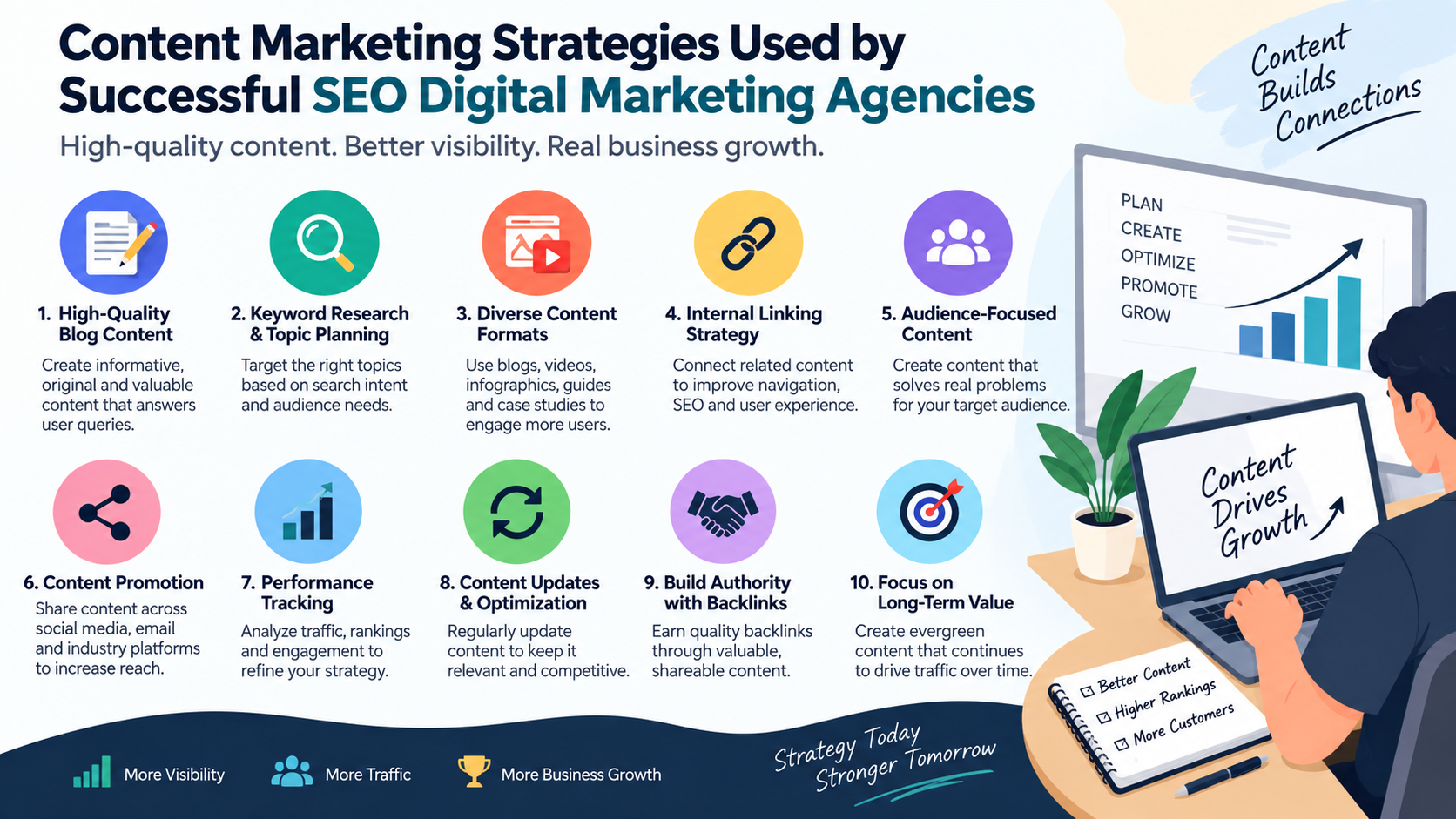
Content marketing gives businesses an opportunity to demonstrate expertise and answer customer questions.
Useful formats include:
- Educational blog posts
- How-to guides
- Videos
- Infographics
- Case studies
- Industry reports
- FAQs
The strongest content focuses on genuine customer needs rather than repeating keywords.
How does influencer marketing work in India?
Influencer marketing can help businesses reach established communities. Micro-influencers may provide strong engagement within specific niches, while larger creators can provide greater reach.
Regional and language-specific creators can also be useful when targeting particular Indian markets. Businesses should measure enquiries, sales, traffic and other meaningful outcomes rather than relying only on follower counts.
How can email and WhatsApp marketing improve retention?
Email and messaging campaigns can support customer retention through personalized offers, product updates, reminders and useful information.
The goal should be relevant communication rather than sending frequent promotional messages without considering customer interests.
What is performance marketing?
Performance marketing focuses on measurable outcomes such as leads, purchases or qualified enquiries.
Campaigns can be evaluated using metrics such as cost per lead, conversion rate, customer acquisition cost and return on advertising spend.
How Do Leading Indian Companies Build an Omnichannel Marketing Strategy?
Why combine SEO, social media and paid advertising?
Each channel performs a different role. SEO can build long-term organic visibility, paid campaigns can capture immediate demand, and social media can strengthen brand engagement.
Combining these channels can create a more consistent customer journey.
How should businesses connect websites, social media and e-commerce?
A customer's experience should remain consistent from advertisement or social post to landing page and final purchase.
Product information, branding, offers and calls to action should be aligned across platforms.
How is first-party data used?
Businesses can use information collected directly through websites, purchases, enquiries and customer interactions to understand preferences and improve personalization.
How Is AI Changing Digital Marketing in India?
How can AI improve content and marketing workflows?
AI can assist marketers with research, content ideas, customer segmentation, campaign analysis and repetitive tasks. However, human review remains important because useful marketing content requires accuracy, originality and an understanding of the audience.
How are AI chatbots being used?
AI-powered chatbots can answer common questions, guide visitors and support customer service. They can also help businesses respond outside normal working hours.
What is changing with AI-powered search?
Search is becoming more conversational. Google AI Overviews and generative search experiences can provide answers directly within search interfaces.
This makes GEO, or Generative Engine Optimization, increasingly relevant. Businesses should provide clear, factual and well-structured information that can be easily understood and referenced by search systems.
Which Digital Marketing Strategies Work for Different Industries?
What works for e-commerce and D2C brands?
E-commerce businesses often benefit from product SEO, shopping campaigns, remarketing, social commerce, reviews and conversion optimization.
What works for IT and SaaS companies?
Technology businesses can use technical content, SEO, LinkedIn marketing, webinars, case studies and lead-generation campaigns to build authority and generate qualified enquiries.
What works for healthcare and education?
Healthcare and education businesses need trustworthy, informative content. Search visibility, local SEO, expert-led information and clear service pages can support customer research.
What works for real estate, travel and local businesses?
Location-based SEO, Google Business Profile optimization, visual content, reviews and targeted advertising can be especially useful for businesses serving specific locations.
Why Does Regional and Vernacular Marketing Matter in India?
Should businesses create regional-language content?
For many markets, yes. Consumers may search, watch videos and interact with brands in their preferred regional language.
Hindi, Malayalam, Tamil, Telugu, Kannada, Bengali and other regional languages can help businesses create more locally relevant campaigns.
How can businesses target Tier 2 and Tier 3 markets?
Companies can combine local SEO, regional-language content, local creators, location-specific landing pages and targeted advertising.
The important point is to adapt the message to the audience rather than simply translating the same campaign word for word.
How Do Leading Companies Measure Digital Marketing Success?
Which metrics matter most?
Important performance indicators include:
- Organic traffic
- Search visibility
- Qualified leads
- Conversion rate
- Customer acquisition cost
- Return on ad spend
- Customer lifetime value
- Engagement
- Brand awareness
The right KPI depends on the business model. A SaaS company may focus on qualified leads and customer acquisition cost, while an e-commerce company may prioritize revenue and ROAS.
How Much Does Digital Marketing Cost in India?
What determines digital marketing cost?
There is no single price that applies to every business. Costs depend on the number of services, competition, target locations, advertising budget, content requirements and campaign complexity.
SEO, social media management, paid advertising, influencer campaigns and content marketing can all have different pricing structures.
A business should compare expected outcomes and expertise rather than choosing a provider based only on the lowest quotation.
Should a Business Hire an SEO Company or Build an In-House Team?
| Factor | In-House Team | Digital Marketing Agency |
|---|---|---|
| Cost | Higher fixed staffing cost | Flexible service packages |
| Expertise | Depends on team size | Access to multiple specialists |
| Tools | Company provides tools | Agency may provide tools |
| Scalability | Moderate | Usually easier to scale |
| Best for | Larger established teams | SMEs, startups and growing businesses |
An experienced SEO company in India can be useful when a business needs specialist knowledge without building a large internal team.
Similarly, an SEO Digital Marketing Agency can combine SEO, content, paid advertising and social media expertise under one strategy.
How Should a Business Choose the Right Digital Marketing Strategy?
How do you define the target audience?
Start with customer demographics, location, interests, problems, search behaviour and buying intent.
How should businesses set goals?
Goals should be measurable. Examples include increasing qualified leads, improving organic visibility, increasing online sales or reducing customer acquisition costs.
How should businesses choose channels?
Choose channels based on where customers actually search, research and make purchasing decisions.
Why should businesses test and optimize campaigns?
Digital marketing is not a one-time activity. Performance data can reveal which content, keywords, advertisements and landing pages are generating meaningful results.
What Common Digital Marketing Mistakes Should Businesses Avoid?
Businesses should avoid relying entirely on social media, ignoring SEO, producing content without understanding search intent, running advertisements without conversion tracking and neglecting mobile users.
Another common mistake is using exactly the same strategy for every Indian market. Customer behaviour can differ significantly by industry, location, language and purchasing power.
Most importantly, businesses should measure business outcomes instead of focusing only on vanity metrics such as impressions or follower counts.
What Is the Future of Digital Marketing in India?
Will AI become more important?
AI is likely to play a larger role in campaign analysis, personalization, automation, customer service and search.
What is the role of GEO?
Generative Engine Optimization is becoming relevant as consumers increasingly receive answers through AI-powered search and conversational systems.
Will video and social commerce continue growing?
Short-form video, creator marketing and social commerce are likely to remain important because they combine discovery, engagement and product consideration.
Why will first-party data matter?
As privacy expectations and digital advertising environments change, businesses will need stronger direct relationships with customers and better use of responsibly collected first-party data.
Conclusion
The most effective digital marketing strategies used by leading companies in India are not based on one channel or one trend. They combine SEO, paid advertising, content, social media, customer data, regional targeting and increasingly AI-powered marketing.
For businesses evaluating a digital marketing company in India, the priority should be finding a strategy that connects marketing activity with measurable business goals. Whether the objective is more organic traffic, qualified leads, online sales or stronger brand visibility, the right approach starts with understanding the customer and then selecting the channels that best reach them.
Voicene Technologies LLP helps businesses bridge traditional operations and modern digital transformation through technology, AI and digital marketing solutions. A well-planned digital strategy can help Indian businesses build stronger online visibility, reach the right audiences and compete more effectively in an increasingly digital marketplace.
FAQs
Recent Blogs