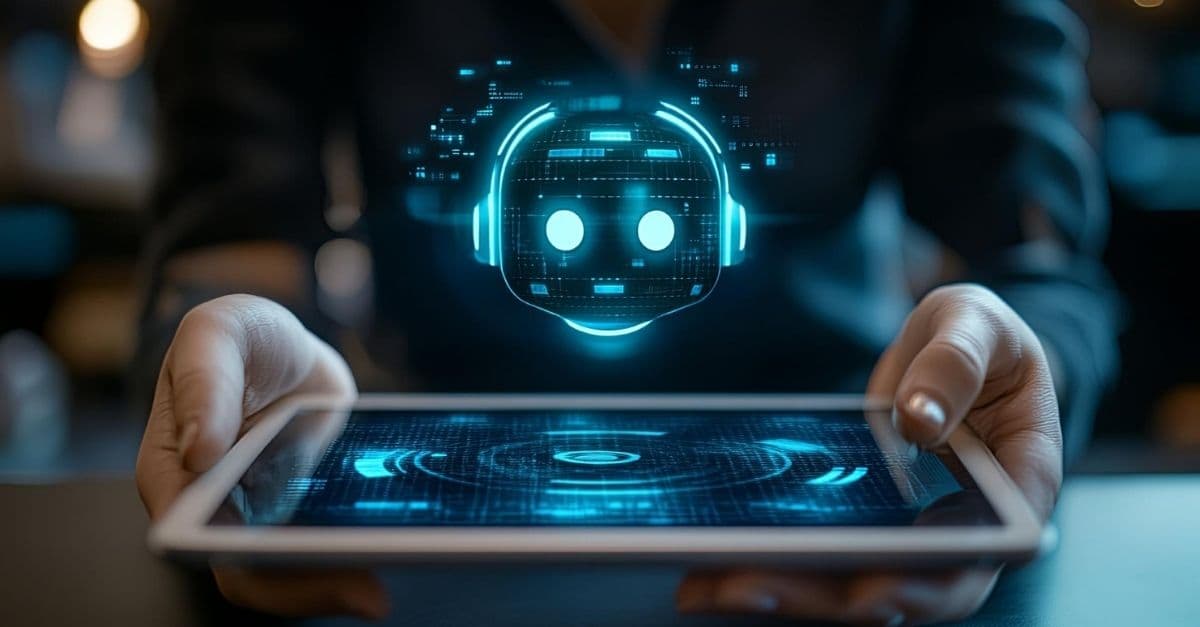
Human + AI Collaboration: The Future of Intelligent Business Operations
August 4, 2026

Artificial intelligence is no longer a technology reserved for large enterprises or research labs. It has become part of everyday business, helping organizations answer customer queries, analyze data, automate workflows, and make faster decisions. Yet the biggest transformation isn't happening because AI is replacing people; it's happening because people and AI are learning to work together.
The most successful businesses recognize that AI performs best when it complements human expertise rather than competes with it. While AI can process enormous volumes of information, identify patterns, and automate repetitive work, people contribute creativity, critical thinking, empathy, and ethical judgment. Together, these strengths create a smarter, more efficient, and more resilient way of operating.
As digital transformation accelerates across industries, human-AI collaboration is becoming one of the defining characteristics of intelligent business operations.
Smarter Decisions Through Data and Human Insight
Every business decision involves balancing facts, experience, and intuition. AI strengthens this process by analyzing large datasets in seconds, identifying trends, forecasting outcomes, and uncovering opportunities that would otherwise remain hidden.
However, data alone rarely tells the complete story.
Business leaders still need to consider customer expectations, market conditions, organizational priorities, and ethical implications before making strategic decisions. AI delivers valuable insights, but people provide the context that turns those insights into meaningful action.
The financial sector offers a clear example. AI systems continuously monitor markets, detect unusual patterns, and evaluate investment risks in real time. Financial professionals interpret these findings alongside economic conditions and client objectives before making informed recommendations. The result is faster, more accurate, and better-balanced decision-making.
Automating Routine Work Without Losing the Human Element
One of AI's greatest strengths is handling repetitive, time-consuming tasks. By automating routine work, businesses allow employees to spend less time on administrative activities and more time solving problems, improving processes, and creating value.
In manufacturing, AI-powered systems inspect products, monitor production lines, and predict equipment failures before they occur. Engineers and operations teams can then focus on process improvements and quality assurance instead of repetitive inspections.
Retail businesses use AI to forecast inventory, optimize product placement, and respond to customer enquiries through intelligent chatbots. Employees are able to dedicate more time to customer relationships and situations where human judgment truly matters.
Rather than replacing jobs, workplace automation is reshaping them. Employees increasingly become decision-makers, supervisors, and innovators while AI manages routine execution.
Delivering Better Customer Experiences
Today's customers expect fast, personalized, and seamless interactions across every touchpoint. AI helps businesses meet these expectations by analyzing customer preferences, recommending relevant products or services, and providing instant support through virtual assistants.
Technology, however, cannot replace genuine human connection.
When customers encounter complex situations or emotionally important moments, empathy, communication, and understanding become far more valuable than automation.
The hospitality industry demonstrates this balance particularly well. AI can personalize booking recommendations, optimize room pricing, automate reservations, and anticipate guest preferences before arrival. Hotel teams then create memorable experiences through thoughtful service, local knowledge, and personal interactions that no algorithm can replicate.
The combination of AI efficiency and human warmth creates stronger customer relationships and long-term loyalty.
Turning Data Into Business Innovation
Modern organizations generate enormous amounts of data every day. Transforming that information into practical business insights has become a major competitive advantage.
Healthcare providers use AI to analyze medical images, identify early signs of disease, and assist with diagnosis. Doctors combine those insights with clinical expertise and patient interactions to make informed treatment decisions.
Manufacturers rely on predictive maintenance systems that detect equipment issues before breakdowns occur, reducing downtime and maintenance costs.
Retailers use AI to understand buying behavior, forecast demand, and optimize inventory management with greater accuracy.
Across industries, AI transforms raw information into actionable intelligence, while human expertise converts those insights into innovation and strategic growth.
The Human Skills AI Cannot Replace
As AI capabilities continue to expand, concerns about job replacement often dominate discussions. In reality, the skills becoming more valuable are the ones machines cannot easily replicate.
Creativity drives innovation.
Critical thinking helps solve unfamiliar problems.
Emotional intelligence strengthens leadership and customer relationships.
Ethical judgment ensures technology is applied responsibly.
AI can recommend solutions based on historical data, but it cannot fully understand culture, emotions, organizational dynamics, or the broader consequences of every business decision.
Successful organizations therefore treat AI as an intelligent assistant rather than an independent decision-maker. Human oversight remains essential for evaluating recommendations, questioning assumptions, and ensuring technology aligns with organizational values.
Human-AI Collaboration in Action
Across industries, organizations are already demonstrating how people and AI can achieve better outcomes together.
Healthcare providers use AI-assisted diagnostic tools to support medical professionals, improving both speed and accuracy in patient care.
Supply chain teams rely on AI to forecast demand, optimize logistics, and identify potential disruptions before they affect operations.
Customer service departments increasingly work alongside AI assistants that handle routine enquiries, allowing employees to focus on complex conversations requiring empathy, negotiation, and creative problem-solving.
Companies like Voicene Technologies are also demonstrating how AI can become a practical business partner rather than just another software tool.
At Voicene Technologies, AI is applied to solve real business challenges rather than automate work for the sake of automation. The company's AI-powered solutions help organizations simplify document-intensive workflows, extract structured information from complex files, and improve operational efficiency through intelligent automation. By reducing repetitive manual tasks, businesses can free their teams to focus on analysis, strategic decision-making, and innovation. This approach reflects the broader vision of human-AI collaboration, where technology enhances human expertise, enabling organizations to work smarter, faster, and more effectively.
These examples illustrate an important trend: businesses gain the greatest value when AI enhances human capabilities instead of attempting to replace them.
Emerging Trends Reshaping Intelligent Business Operations
Human-AI collaboration continues to evolve rapidly, bringing new opportunities for organizations willing to embrace change.
Explainable AI is becoming increasingly important as businesses seek greater transparency in automated decision-making. Rather than relying on "black box" systems, organizations want AI that clearly explains how recommendations are generated.
Generative AI is transforming knowledge work by helping employees draft reports, summarize information, create content, write software, and accelerate research. Instead of replacing professionals, these tools reduce repetitive work and allow people to focus on creativity and strategic thinking.
AI-powered decision support systems are also becoming more sophisticated, continuously monitoring business performance and alerting managers to opportunities, risks, and unusual patterns before they become significant issues.
Together, these developments point toward a future where AI is deeply integrated into daily business operations while remaining guided by human expertise.
Challenges Businesses Must Address
Successfully adopting AI involves far more than implementing new technology.
Organizations must address concerns around data privacy, cybersecurity, algorithmic bias, regulatory compliance, and employee confidence. Many employees worry about job displacement, while others hesitate to trust AI-generated recommendations.
Businesses can overcome these challenges by investing in AI literacy, encouraging continuous learning, and communicating clearly about how AI supports employees instead of replacing them.
Cross-functional collaboration between technical teams and business experts leads to more practical AI solutions, while transparent governance and regular monitoring help ensure AI systems remain accurate, fair, and aligned with organizational goals.
Practical Steps for Successful AI Adoption
Organizations planning to integrate AI into their operations should approach implementation strategically rather than treating AI as a standalone technology initiative.
Some practical steps include:
- Define clear business objectives before implementing AI.
- Begin with small pilot projects to measure impact and scalability.
- Invest in employee training and AI literacy.
- Encourage collaboration between technical specialists and business teams.
- Maintain transparency in AI-driven decisions.
- Continuously evaluate AI performance and improve systems over time.
- Focus on using AI to enhance employees rather than replace them.
Businesses that adopt AI thoughtfully are far more likely to improve productivity, encourage innovation, and deliver better customer experiences over the long term.
Instead of asking whether AI will replace people, organizations should ask how people and AI can accomplish more together. The companies shaping the future of intelligent business operations are not those relying solely on automation, but those combining technological capability with human expertise.
AI brings speed, consistency, analytical power, and scalability. People contribute creativity, empathy, ethical judgment, leadership, and the ability to navigate uncertainty. Neither delivers its full potential alone.
As AI becomes increasingly woven into everyday business, competitive advantage will belong to organizations that successfully combine both. Human-AI collaboration is no longer an emerging concept it is becoming the foundation of smarter, more innovative, and more resilient businesses.
Frequently Asked Questions
Recent Blogs