E-commerce SEO vs PPC: Which Strategy Delivers Better ROI?
July 17, 2026
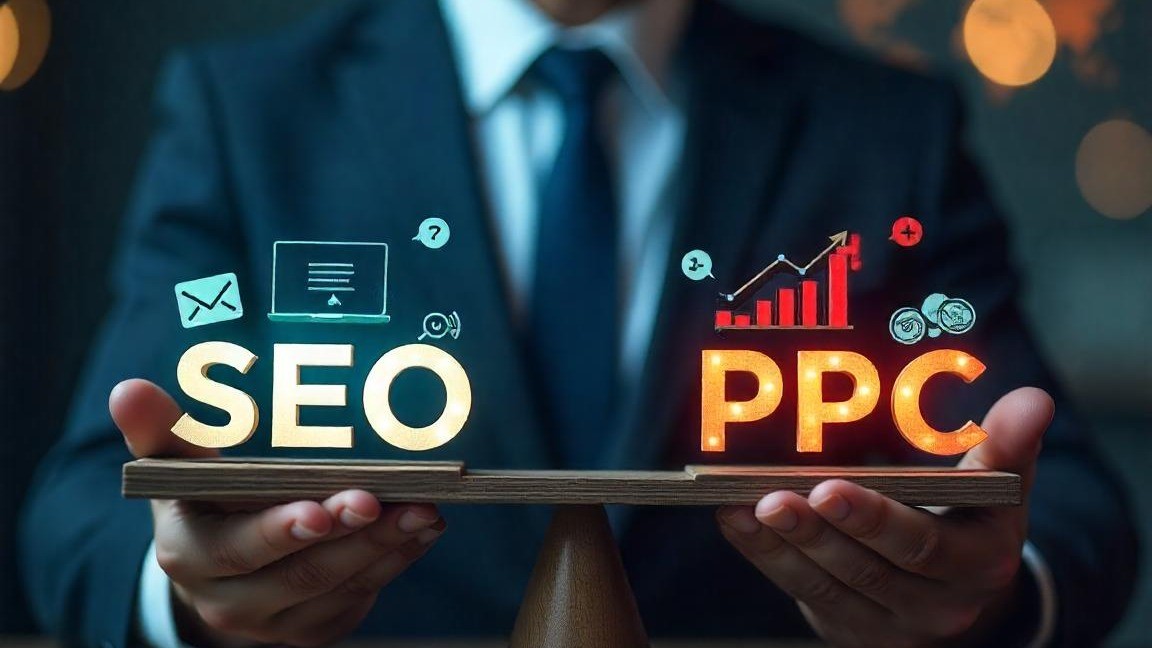
If you're trying to grow an online store, you've probably asked yourself: Should I invest in SEO or PPC? It's one of the most common questions business owners face when planning their digital marketing budget. While paid ads can generate immediate traffic, SEO builds sustainable visibility that continues delivering results over time.
Businesses that invest in e-commerce seo services often experience consistent organic traffic, better brand credibility, and lower customer acquisition costs in the long run. On the other hand, PPC campaigns provide instant exposure and measurable conversions, making them ideal for product launches, seasonal promotions, and competitive markets.
The real question isn't whether SEO or PPC is better, it's which strategy delivers the highest return on investment (ROI) for your specific business goals.
The Digital Crossroads: Understanding Search Fundamentals
Q: What is the difference between SEO and PPC?
Search Engine Optimization (SEO) focuses on improving your website's visibility in organic search results. It involves optimizing content, improving technical performance, building authority, and enhancing user experience.
Pay-Per-Click (PPC) advertising allows businesses to appear at the top of search results instantly by paying for each click on their ads.
While both channels aim to drive qualified traffic, they achieve this through entirely different approaches.
The Long-Term Equity of SEO
SEO is often considered a long-term investment because every optimized page becomes a digital asset that continues attracting visitors.
Benefits include:
- Sustainable organic traffic
- Higher customer trust
- Lower acquisition cost over time
- Better brand authority
- Improved user experience
Professional e-commerce seo services help businesses optimize product pages, category pages, technical SEO, site speed, structured data, and content marketing for long-term growth.
The Immediate Scalability of PPC
PPC delivers results almost immediately.
Advantages include:
- Instant visibility
- Fast lead generation
- Easy campaign testing
- Precise audience targeting
- Budget flexibility
However, once your advertising budget stops, your visibility disappears.
Comparing the ROI Models: Short-Term vs. Long-Term
Q: Which strategy generates faster ROI?
PPC generally delivers faster returns because campaigns start generating traffic immediately after launch.
SEO requires patience but often becomes more profitable over time because you aren't paying for every click.
For businesses seeking quick sales, PPC is ideal.
For businesses focused on sustainable growth, SEO typically delivers stronger long-term ROI.
Calculating ROI Formulas for Search Channels
A simple ROI calculation:
ROI = (Revenue – Marketing Cost) ÷ Marketing Cost × 100
For PPC:
- Ad spend
- Landing page costs
- Management fees
- Conversion value
For SEO:
- Content creation
- Technical optimization
- Link building
- Website improvements
Although SEO requires upfront investment, its cost per acquisition generally decreases as rankings improve.
Why Organic Leads Often Have Higher Lifetime Value (LTV)
Organic visitors usually:
- Research products carefully
- Spend more time on the website
- Trust search results
- Return more frequently
- Convert at higher lifetime value
This is one reason many businesses prioritize e-commerce services when planning long-term digital growth.
The 2026 Landscape: AI, Trust, and Attribution
Q: How is AI changing SEO and PPC?
Search engines now use AI to provide summarized answers, personalized recommendations, and semantic search results.
Businesses must optimize beyond traditional keywords by creating helpful, experience-based content.
Navigating AI Overviews and Semantic Search
Modern SEO focuses on:
- User intent
- Entity optimization
- Structured data
- Helpful content
- Question-based content
- Topic authority
Pages designed around real customer questions are more likely to appear in AI-generated search experiences.
Building Credibility through E-E-A-T Signals
Google increasingly rewards websites demonstrating:
- Experience
- Expertise
- Authoritativeness
- Trustworthiness
Strong E-E-A-T includes:
- Author profiles
- Customer testimonials
- Product reviews
- Business credentials
- Secure website
- Updated content
These trust signals improve rankings while increasing customer confidence.
The Hybrid Funnel: Why Integration is the Real Winner
Should businesses choose SEO or PPC?
For most businesses, the strongest ROI comes from combining both strategies.
SEO builds long-term traffic.
PPC fills short-term gaps.
Together they create a complete marketing funnel.
Using PPC Data to Inform SEO Content Strategy
PPC campaigns reveal valuable insights such as:
- High-converting keywords
- Best-performing landing pages
- Customer search intent
- Seasonal buying trends
- Top-selling products
These insights can improve SEO content planning and increase organic conversion rates.
Reducing Cost-Per-Acquisition (CPA) through Organic Support
As SEO rankings improve:
- Paid advertising dependency decreases
- Cost per acquisition falls
- Organic traffic increases
- Brand recognition improves
- Marketing budgets become more efficient
Businesses using integrated SEO and PPC often experience better overall marketing performance than relying on a single channel.
Choosing the Right Strategy for Your Business Stage
Which strategy should your business choose?
The answer depends on your goals.
Choose SEO if you want:
- Long-term growth
- Sustainable traffic
- Better brand authority
- Lower acquisition costs
Choose PPC if you need:
- Immediate visibility
- Fast sales
- Product launches
- Seasonal campaigns
The highest-performing businesses rarely choose only one.
Instead, they combine professional e-commerce seo services with carefully managed PPC campaigns to maximize visibility, improve conversions, and achieve stronger long-term ROI.
By balancing immediate advertising results with sustainable organic growth, businesses create a digital marketing strategy that continues delivering value year after year.
Frequently Asked Questions
Recent Blogs