AI Workflow Automation for HR, Finance & Customer Support
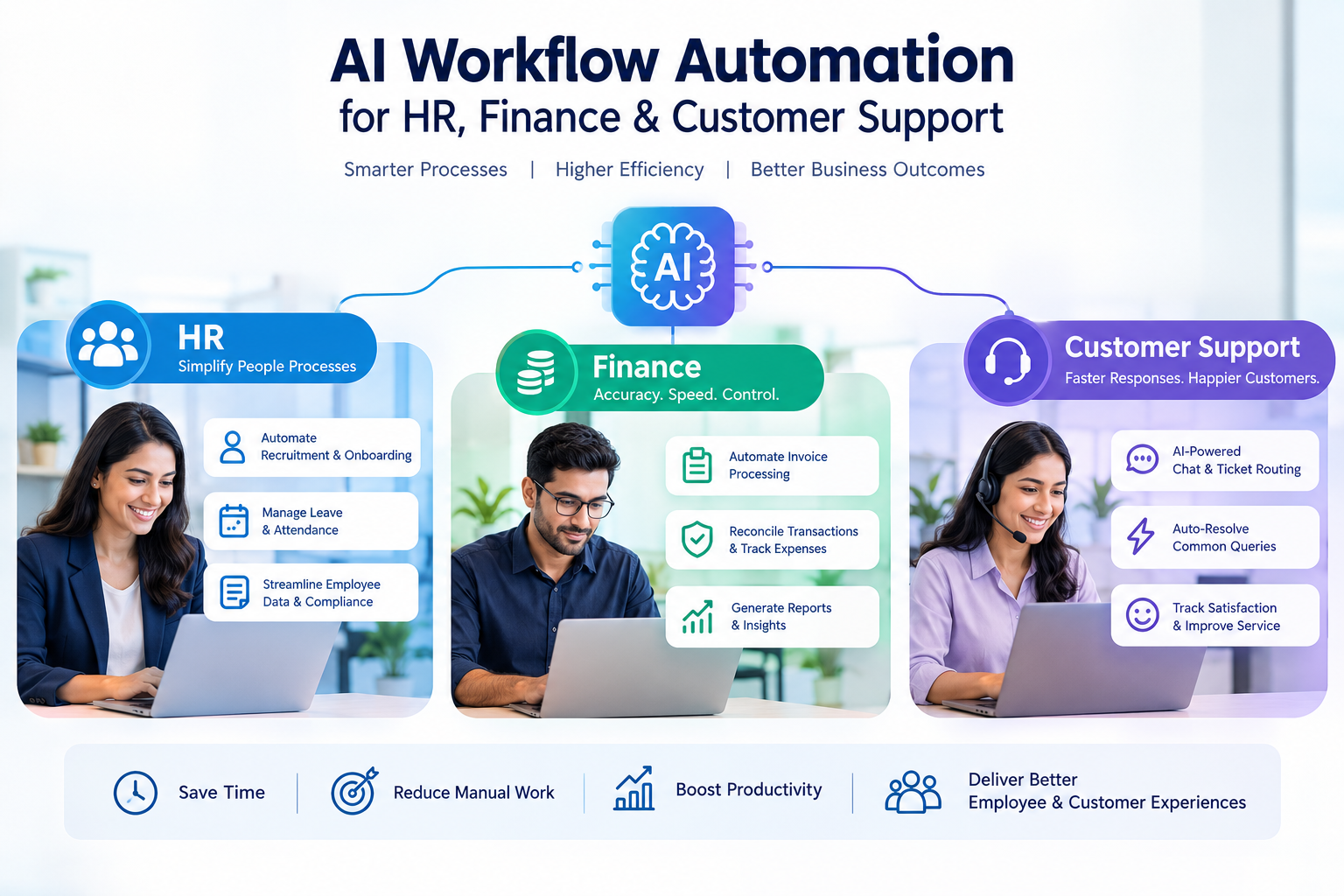
What Is AI Workflow Automation And Why It Matters for HR, Finance & Support Teams?
AI Workflow Automation refers to the use of artificial intelligence to handle repetitive, rule-based, and decision-heavy tasks across departments without constant human intervention. Unlike traditional software that simply moves data from one system to another, AI-driven automation can read documents, understand context, make judgment calls, and learn from outcomes over time.
For Indian businesses juggling compliance deadlines, high transaction volumes, and rising customer expectations, this shift matters because it converts slow, error-prone manual processes into fast, auditable, self-improving systems.
How does it differ from traditional automation or RPA?
Traditional Robotic Process Automation (RPA) follows fixed, scripted rules; if a form changes format, the bot breaks. AI Workflow Automation uses machine learning and natural language processing, so it can interpret unstructured data like scanned invoices, resumes, or customer chat messages, and adapt as inputs vary. RPA moves data; AI automation understands and acts on it.
What core capabilities should a good platform offer?
Look for document processing (OCR plus context extraction), approval-routing intelligence, conversational chatbots, and predictive workflow triggers that flag issues like a payroll anomaly or a stalled support ticket before they escalate.
Why are Indian SMEs and enterprises adopting it faster in 2025–26?
Cloud infrastructure costs have dropped, UPI and digital-first operations have normalized automation culture, and regulatory pressure (GST filings, DPDP Act compliance, RBI reporting) has made manual tracking riskier. AI workflow automation services are increasingly priced for SMB budgets, not just large enterprises.
What's the Business Case - ROI and Cost Savings in the Indian Context?
What does manual HR, Finance, or Support work typically cost?
A mid-sized Indian company often spends significant staff hours weekly on manual resume screening, invoice matching, and ticket triage costs that scale linearly with headcount and transaction volume, unlike automated systems.
How fast is ROI for Indian SMBs vs large enterprises?
SMBs adopting focused automation (like invoice processing or chatbot support) often see payback within a few months, since a small team feels immediate relief. Large enterprises take longer to realize ROI due to integration complexity across legacy ERP and HRMS systems, but the absolute savings are larger at scale.
What are the hidden costs of not automating?
Beyond direct labor cost, delayed GST reconciliation or payroll errors invite compliance penalties, slow support response times drive customer churn, and manual HR processes contribute to attrition when employees experience clunky onboarding or delayed reimbursements.
How Is AI Workflow Automation Used in HR?
What are the top HR use cases?
Resume screening and shortlisting, automated onboarding checklists, leave and attendance tracking, and payroll compliance calculations covering PF, ESI, and TDS deductions.
Which platforms are popular in India?
Both global platforms with India-specific modules and India-first HRTech vendors built around local payroll and statutory compliance are widely used; the right choice depends on whether global scalability or local compliance depth matters more.
What about data privacy under the DPDP Act?
Any HR automation tool handling employee data should offer consent management, data localization options, and clear retention policies aligned with India's Digital Personal Data Protection Act.
How Is AI Workflow Automation Used in Finance?
What finance tasks benefit most?
Invoice processing, GST reconciliation, expense audit flagging, and fraud detection are the highest-impact areas, since these are high-volume, rule-heavy, and error-prone when done manually.
Does it integrate with Indian accounting software?
Most modern AI workflow automation services offer native or API-based integration with Tally, Zoho Books, and QuickBooks India, allowing automated data sync without re-keying entries.
What regulatory factors apply?
GST filing accuracy and, for BFSI companies, RBI guidelines around data handling and audit trails are essential considerations when selecting a finance automation vendor.
How Is AI Workflow Automation Used in Customer Support?
What are common support use cases?
WhatsApp and chatbot-based support, multilingual ticket routing, and sentiment analysis to prioritize frustrated customers are the most common applications.
Why does multilingual support matter in India?
A large share of Indian consumers prefer support in Hindi or regional languages. AI-driven language detection and routing significantly improve resolution speed and customer satisfaction compared to English-only systems.
How does omnichannel integration work?
Leading platforms connect WhatsApp Business API, IVR systems, and email into a single automated workflow, so a customer's issue is tracked consistently regardless of the channel they use.
How Do You Choose the Right Platform?
Key factors include INR-based pricing (per-seat vs usage-based), ease of integration with existing ERP, CRM, and HRMS tools, scalability from SMB to enterprise, availability of India-based support and SLAs, and certifications like SOC 2, ISO 27001, and DPDP readiness.
What Does a Typical Implementation Roadmap Look Like?
Most successful rollouts start with a pilot in one department, often finance invoice processing or support chat, before expanding company-wide. Change management, including training HR, Finance, and Support staff, is often the deciding factor in adoption success. Common pitfalls for Indian businesses include underestimating data-cleanup effort and skipping compliance review before go-live.
Conclusion
AI workflow automation is transforming how HR, Finance, and Customer Support teams in India manage repetitive tasks, improve operational efficiency, and maintain compliance. From streamlining employee onboarding and financial processes to enhancing customer service, the right automation solution can help businesses save time and support sustainable growth. Whether you choose AI workflow automation services or AI web development services for a customized platform, evaluate your business requirements, integration capabilities, data security, and scalability before making a decision. By adopting the right AI automation strategy, Indian businesses can build more efficient workflows and stay prepared for the evolving digital landscape.
Frequently Asked Questions
Yes, many vendors now offer usage-based INR pricing designed specifically for SMB budgets.
Recent Blogs