AI Chatbots for Lead Generation: Best Practices and Benefits
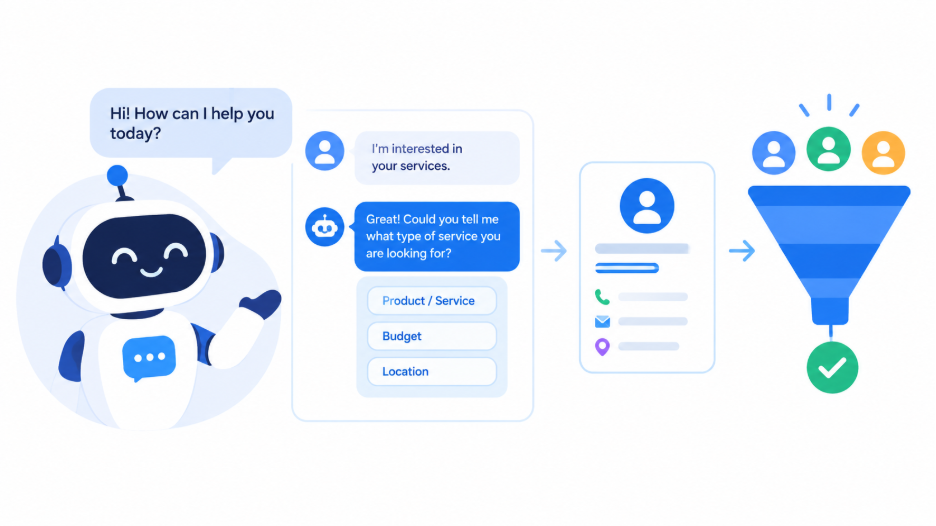
Businesses today receive customer enquiries through websites, WhatsApp, social media, and other digital channels. Responding quickly to every enquiry can be difficult when sales teams are handling multiple conversations at the same time. AI chatbots for lead generation help businesses respond instantly, collect customer information, understand intent, qualify prospects, and move suitable leads toward the next sales step.
For Indian businesses, chatbots can be particularly useful across websites, WhatsApp, Instagram, Facebook Messenger, and voice or IVR channels. When properly designed, they can support sales teams without completely replacing human interaction.
What Is an AI Chatbot for Lead Generation?
An AI chatbot for lead generation is a conversational software solution that interacts with potential customers and helps businesses capture and qualify enquiries.
Instead of requiring every visitor to complete a traditional form, a chatbot can ask relevant questions such as:
- What product or service are you interested in?
- What is your approximate budget?
- Which location are you looking for?
- When would you like a consultation or demonstration?
- What is the best way to contact you?
The chatbot can then collect the information and send qualified leads to a CRM or sales team.
How Does It Differ from a Rule-Based Chatbot?
A traditional rule-based chatbot generally follows predefined buttons, menus, and conversation paths. An AI-powered chatbot can understand variations in natural language and respond according to the context of a conversation.
For example, a customer might type “I want to know the price” instead of selecting a pricing button. An AI chatbot can interpret the intent and continue the conversation accordingly.
How Do AI Chatbots Capture, Qualify, and Route Leads?
A chatbot can begin by identifying the visitor's requirement, collect essential contact details, ask qualification questions, and assign the enquiry to the appropriate sales representative.
Lead routing can be based on factors such as location, product interest, budget, urgency, or customer type.
Where Can Chatbots Work in India?
Businesses can deploy chatbots across websites, WhatsApp, Instagram, Facebook Messenger, and other supported communication channels. Voice and IVR solutions can also be connected to automated customer journeys where appropriate.
Why Are Indian Businesses Adopting Chatbots for Lead Generation?
WhatsApp-First Consumer Behavior
WhatsApp is an important communication channel for many businesses and customers in India. A WhatsApp-enabled chatbot can help companies respond to enquiries without requiring customers to move to another platform.
Mobile-First, Low-Patience Buyers
Customers increasingly expect quick answers, particularly when comparing products or services online. A chatbot can provide immediate responses while collecting the information required by sales teams.
Rising Customer Acquisition Costs
When businesses invest in advertising and digital marketing, losing enquiries because of slow responses can reduce the value of that investment. Automated conversations can help businesses respond to prospects sooner.
Regional Language Demand
Businesses serving Indian audiences may need to support languages and communication styles such as Hindi, Tamil, Malayalam, Bengali, Telugu, and Hinglish. Multilingual conversational capabilities can make interactions more accessible.
What Are the Key Benefits of AI Chatbots for Lead Generation?
24/7 Instant Response
Chatbots can respond to enquiries outside normal working hours, including weekends, holidays, and late-night enquiries.
Higher Lead Capture Opportunities
A conversational interface can make it easier for visitors to start an enquiry and provide basic information before speaking with a salesperson.
Lower Operational Workload
Automating repetitive questions can reduce the number of routine enquiries handled manually by sales and support teams.
Automatic Lead Qualification
A chatbot can ask predefined qualification questions and identify whether a prospect meets specific business criteria.
Personalized Conversations at Scale
AI can use information provided during a conversation to create a more relevant customer experience.
Customer Intent Insights
Chatbot conversations can reveal common questions, product interests, objections, and customer requirements.
Reduced Sales-Team Workload
Sales representatives can spend more time on qualified prospects instead of manually responding to every basic enquiry.
What Are the Best Practices for Using Chatbots in Lead Generation?
Define One Clear Goal per Conversation
Every chatbot flow should have a clear purpose, such as booking a demo, requesting a quotation, scheduling a store visit, or collecting an enquiry.
Keep Questions Short
Avoid asking too many questions at once. Collect essential information progressively and request contact details at an appropriate point in the conversation.
Support Regional Languages and Hinglish
If the target audience communicates in regional languages or Hinglish, conversational experiences should be designed around those preferences.
Use WhatsApp Click-to-Chat and QR Codes
Businesses can connect campaigns, websites, offline materials, and QR codes to supported messaging journeys where appropriate.
Design a Smooth Human Handoff
Customers should have an easy way to connect with a human representative when the chatbot cannot answer a question or when the enquiry requires expert assistance.
Follow Up Automatically
Automated reminders and follow-ups can help businesses reconnect with prospects who started but did not complete an enquiry.
Test and Optimize Continuously
Businesses should monitor conversation completion, lead quality, response time, and conversion-related metrics and improve chatbot flows over time.
What Are the Industry-Specific Use Cases in India?
Real Estate
Chatbots can collect property preferences, budget ranges, preferred locations, and site-visit requirements.
Education and EdTech
Education businesses can use conversational systems for course enquiries, admission questions, counselling requests, and lead collection.
Healthcare and Clinics
Chatbots can support appointment requests and provide basic information before transferring customers to staff when necessary.
BFSI
Financial businesses can use conversational workflows for initial enquiry collection and pre-qualification, subject to applicable requirements.
E-commerce and D2C
Chatbots can help customers discover products, answer common questions, and support cart-recovery or enquiry workflows.
Travel and Hospitality
Travel businesses can collect destination preferences, dates, budgets, and other trip requirements.
Automobile and Retail
Dealerships and retailers can use chatbots for product enquiries, test-drive requests, quotations, and store-visit bookings.
Which Features Should You Look For Before Buying an AI Chatbot?
WhatsApp Business Integration
For businesses relying heavily on WhatsApp, verify whether the platform supports the required official WhatsApp Business integration.
Multilingual Natural Language Understanding
Check whether the chatbot can understand the languages and communication styles used by the intended audience.
CRM and Business Integrations
Useful integrations may include Zoho, HubSpot, Salesforce, LeadSquared, Google Sheets, and other business systems.
Analytics and Reporting
A suitable platform should provide useful information about conversations, leads, response rates, and other relevant metrics.
No-Code or Developer-Based Setup
Small businesses may prefer easier configuration, while larger organizations may require deeper customization and developer access.
Data Security and Privacy
Businesses should evaluate how customer information is collected, stored, processed, and shared and consider applicable Indian data-protection requirements.
Onboarding and Support
Implementation support, documentation, training, and ongoing assistance can be important when deploying a chatbot at scale.
How Should You Choose the Right AI Chatbot?
Start by identifying your business size, sales volume, customer channels, budget, and integration requirements.
A startup may need a simple website chatbot, while an enterprise may require multilingual conversations, CRM integration, analytics, automation, and multiple communication channels.
Before selecting a provider, ask:
- Which channels are supported?
- Does it integrate with our CRM?
- What languages are supported?
- How is pricing calculated?
- Are setup or integration charges separate?
- Can customers reach a human agent?
- What analytics are available?
- How is customer data protected?
Businesses should also watch for hidden conversation fees, limited integrations, weak language support, or platforms that cannot support the required communication channels.
How Much Does an AI Chatbot Cost in India?
AI chatbot pricing can vary depending on features, usage, integrations, customization, and support. Pricing models may include monthly subscriptions, per-conversation charges, per-message charges, setup fees, or custom enterprise pricing.
Additional costs may apply for integrations, customization, messaging services, or other third-party services. Businesses should calculate the complete cost rather than comparing subscription prices alone.
A simple ROI calculation can compare the previous cost of handling enquiries manually with the cost of the chatbot and associated services. Businesses can then monitor metrics such as qualified leads, response time, conversion rate, and cost per lead.
A free trial or pilot project can be useful before committing to a larger deployment.
What Common Chatbot Mistakes Should Businesses Avoid?
Over-Automation
Automation should not eliminate human support where customers require expert assistance.
Complicated Conversation Flows
Long or confusing conversations can cause visitors to abandon the interaction.
Ignoring Privacy and Consent
Businesses should collect customer information responsibly and provide appropriate consent mechanisms for communication.
No Sales Follow-Up Process
Capturing a lead is only the beginning. Sales teams need a process for responding to qualified prospects.
How Can a Business Implement an AI Chatbot in Five Steps?
Step 1: Define the Goal Decide whether the primary purpose is lead capture, qualification, demo booking, quotation requests, or another objective.
Step 2: Map the Customer Journey Identify the questions customers ask and the information sales teams need.
Step 3: Select the Platform and Channel Choose the appropriate chatbot technology and communication channels.
Step 4: Build, Integrate, and Launch a Pilot Connect the chatbot with relevant systems and test the experience with a limited audience.
Step 5: Measure and Scale Track lead volume, response time, lead quality, conversion rate, and cost per lead before expanding the implementation.
How Can Businesses Get Started?
AI chatbots for lead generation can help businesses create faster digital conversations, collect prospect information, automate qualification, and connect suitable enquiries with sales teams.
The right solution depends on the business's audience, communication channels, budget, sales process, language requirements, and integration needs. Instead of automating every customer interaction, businesses should focus on the parts of the customer journey where automation can provide clear value while keeping human support available when needed.
For businesses exploring AI, automation, software, data, SEO, and digital solutions, Voicene Technologies LLP provides technology-focused solutions designed to support business operations and customer experiences.
A practical starting point is to identify one high-volume lead-generation journey, build a focused chatbot workflow, connect it to the relevant business systems, measure the results, and improve the experience based on actual customer conversations.
Frequently Asked Questions About AI Chatbots for Lead Generation
The cost depends on the platform, number of conversations, integrations, customization, support requirements, and pricing model. Businesses should evaluate total implementation and operating costs.
Recent Blogs