How E-commerce SEO Services Increase Organic Traffic and Conversions
The Indian e-commerce industry is experiencing significant growth as more consumers use online platforms to discover products, compare prices and complete purchases. From clothing and electronics to groceries, beauty products and home appliances, online shopping has become an important part of everyday life. However, increasing competition makes it challenging for independent online stores to attract customers and generate consistent sales. E-commerce SEO services help businesses improve search engine visibility, attract relevant visitors and create more opportunities for conversions. A well-planned strategy combines keyword research, product page optimisation, technical improvements and useful content to support sustainable online business growth.
Understanding the Role of E-commerce SEO in India's Growing Online Market
Growth of India's E-commerce Industry
India's expanding digital economy has created opportunities for businesses to reach customers through online stores. Consumers can explore products from established marketplaces and independent retailers without visiting physical shops.
However, simply launching an online store does not guarantee visibility. Businesses need an organised website structure, informative product descriptions and relevant content to help search engines understand their offerings.
Search optimisation allows retailers to connect with customers who are actively searching for their products. This creates opportunities for small and medium-sized businesses to develop visibility without depending entirely on paid advertisements.
Changing Online Shopping Behaviour Across Indian Cities
Shopping behaviour varies across Tier 1, Tier 2 and Tier 3 cities. Customers increasingly use smartphones to research products, compare prices and check customer reviews before purchasing.
Some shoppers prioritise affordability, while others focus on product quality, brand reputation, delivery availability and warranty support. Online retailers should consider these preferences when developing their website content.
Providing clear product information, transparent pricing and convenient navigation helps businesses serve customers with different requirements.
Product Research and Purchase Decisions
Indian consumers often compare multiple products before making a purchase. They may search for specifications, product reviews, alternative brands and recommendations.
Online stores that provide accurate descriptions and useful comparisons make this process easier. Informative buying guides also help customers understand product features and select suitable options.
Google Search for Product Discovery
Google is an important channel through which customers discover online products and retailers. Search queries can range from general product information to specific transactional searches.
Optimising product pages, category pages and informational articles helps search engines understand the relevance of website content. This improves opportunities to appear for searches related to the products a business offers.
Competing with Amazon, Flipkart and Myntra
Independent online retailers do not need to target every broad keyword to compete with established marketplaces. They can focus on niche products, specialised categories and specific customer requirements.
For example, an online store selling outdoor equipment can target searches related to camping accessories, portable cooking equipment and hiking products.
Relevant content, useful product information and a well-organised website can help smaller retailers attract customers looking for specialised products.
How E-commerce SEO Services Increase Organic Traffic
High-Intent Keyword Research
Keyword research identifies the search terms customers use when looking for products online. Understanding search intent helps businesses select keywords that match different stages of the purchasing journey.
Informational searches focus on learning about products, commercial searches involve comparing available options, and transactional searches indicate stronger purchase intent.
For example, "best office chairs for home", "ergonomic office chair comparison" and "buy ergonomic office chair online" represent different customer requirements.
Mapping these keywords to relevant pages helps attract visitors who are more likely to engage with products.
Product Page Ranking Improvements
Product pages are important entry points for potential customers. Each page should contain a descriptive title, unique product information, relevant headings and an appropriate meta description.
Product content should explain specifications, materials, sizes, features and practical benefits. Accurate information helps search engines understand the page while supporting customer purchasing decisions.
Category Page Optimisation
Category pages organise products into relevant groups and make website navigation easier.
For example, an electronics retailer can create separate categories for smartphones, laptops, headphones and accessories.
Each category should have a clear heading, useful introductory content and links to relevant products. Optimised category pages can target broader search terms and attract customers exploring different product options.
Long-Tail Keyword Targeting
Long-tail keywords are specific search phrases that often reveal clear customer requirements.
Examples include "waterproof hiking backpack for travel" and "stainless steel kitchen storage containers online".
These searches may have lower search volumes than broad keywords, but they can attract visitors looking for particular product features.
Including relevant phrases naturally in product titles, descriptions and category content helps businesses connect with targeted audiences.
Seasonal Search Optimisation for Indian Festivals
Indian shopping festivals create opportunities for retailers to attract seasonal demand. Diwali, Onam, Pongal, Eid and Christmas are important occasions when customers search for gifts, clothing, electronics and household products.
Businesses can prepare seasonal landing pages, gift guides and promotional product collections before these occasions.
Updating seasonal content with relevant product information helps customers discover suitable options during important shopping periods.
Buying Guides and Informative Blog Content
Informative articles help businesses reach customers who are still researching products.
Buying guides, comparison articles, product care instructions and practical recommendations provide useful information while creating opportunities to link to relevant products.
For example, an electronics retailer can publish a guide explaining how to choose a laptop for professional use. The article can link naturally to suitable laptop categories and product pages.
Google Images and Product Search Visibility
Product images help customers understand the appearance, features and quality of an item.
Businesses should use descriptive filenames, relevant ALT text, appropriate dimensions and compressed image formats. High-quality images can also create additional opportunities for visibility in Google Images.
Essential E-commerce SEO Strategies That Turn Visitors into Customers
Product Titles, Descriptions and Meta Tags
Product titles should identify the item clearly and include relevant attributes such as brand, model, size or product type.
Meta titles and descriptions should accurately explain the page and encourage relevant users to visit the website.
Each important page should have unique metadata instead of repeating identical descriptions across multiple products.
Unique Product Descriptions
Duplicate manufacturer descriptions provide limited differentiation between competing online stores.
Businesses should create original descriptions that explain product specifications, features, benefits and intended uses.
Content should focus on information customers need before purchasing rather than repeating keywords unnecessarily.
Customer Reviews and Ratings
Genuine customer reviews provide useful information about product quality and customer experiences.
Displaying authentic feedback helps visitors evaluate products and understand how items perform in real situations. Businesses should encourage genuine reviews and respond professionally to customer concerns.
Product Images and ALT Text
Product images should be relevant, clear and optimised for website performance.
Descriptive filenames and meaningful ALT attributes improve accessibility and help search engines understand image content.
Using efficient image formats such as WebP can reduce file sizes while maintaining visual quality.
Product Schema and Structured Data
Product structured data helps search engines understand information such as product names, descriptions, prices and availability.
Eligible product pages may qualify for enhanced search appearances when their structured data follows Google's guidelines.
Businesses should ensure that schema information matches the visible product details and remains accurate when prices or availability change.
Internal Linking Between Categories and Products
Internal links connect related website pages and help visitors discover additional products.
Category pages should link to relevant products, while product pages can connect to related items and informative buying guides.
A clear linking structure also helps search engines discover important pages and understand relationships across the website.
Product Filtering and Website Navigation
Customers should be able to find products without unnecessary navigation steps.
Filters such as price, brand, size, colour and product type improve browsing convenience. Website search should also return relevant results for different product names and search terms.
Technical SEO Improvements for E-commerce Website Growth
Website Speed and Core Web Vitals
Website performance influences how easily customers browse products and complete purchases.
Large images, unnecessary scripts and inefficient server responses can slow down important pages.
Technical improvements should focus on image compression, caching, efficient code and server performance. Core Web Vitals monitoring helps identify user experience problems that require attention.
Mobile-Friendly Website Design
A responsive website should adapt to different screen sizes and provide convenient navigation across smartphones, tablets and desktops.
Product information, images, buttons and checkout elements should remain accessible on smaller screens.
Duplicate Product URLs and Canonicalisation
E-commerce platforms may generate multiple URLs for similar products through filters, sorting options and tracking parameters.
These variations can create duplicate content and unnecessary crawling.
Canonical tags help indicate the preferred version of a page. Businesses should regularly review canonical settings, redirects and internal links to maintain a consistent URL structure.
Product Variations and Faceted Navigation
Products may have different sizes, colours, models and other variations.
These options should be organised in a way that helps customers without creating unnecessary indexable URLs.
Faceted navigation should be managed carefully so that important pages remain accessible while low-value URL combinations do not create crawling problems.
XML Sitemaps and Product Indexing
XML sitemaps help search engines discover important website URLs.
E-commerce sitemaps should include relevant canonical pages and exclude unnecessary parameter-based URLs.
Google Search Console can help identify indexing problems and monitor important product pages.
Breadcrumb Navigation and Structured Data
Breadcrumb navigation shows the relationship between a product page and its parent categories.
It helps visitors understand their location within the website and supports clearer site navigation.
Appropriate structured data provides search engines with additional information about website content and page relationships.
Broken Links, Redirects and Crawl Issues
Broken links and incorrect redirects can interrupt navigation and affect search engine crawling.
Regular technical audits should identify missing pages, redirect chains, server errors and inaccessible product URLs.
Website Architecture for Large Product Catalogues
Large online stores require an organised structure to manage hundreds or thousands of products.
Products should be grouped into logical categories and subcategories. Important pages should remain accessible through internal links without unnecessary navigation depth.
Mobile SEO and Regional Search Optimisation for Indian Consumers
Mobile-First SEO for Indian Online Stores
Smartphones are an important shopping device for Indian consumers. Businesses should prioritise responsive design, fast-loading pages and convenient navigation.
Mobile performance should be reviewed regularly because a website that works well on desktop may still create difficulties on smaller screens.
Product Pages for Smartphone Users
Mobile product pages should present essential information clearly.
Product images, prices, specifications, descriptions and purchase options should be easy to locate. Readable text and accessible buttons help customers move through the shopping journey.
Mobile Checkout and Navigation
A complicated checkout process can prevent customers from completing purchases.
Businesses should reduce unnecessary form fields, provide clear payment instructions and make delivery information easy to understand.
Regional Search Terms and Indian Languages
India has a diverse online audience with different language preferences.
Depending on the target market, businesses can develop relevant content for Malayalam, Hindi, Tamil, Telugu and other regional languages.
Regional content should reflect local search behaviour and customer requirements rather than relying only on direct keyword translation.
Location-Based Search Optimisation
Retailers serving specific cities or regions can provide accurate business information, delivery coverage and location-specific product details.
This helps customers discover online stores that offer products or delivery services in their area.
Delivery, Payment and Return Information
Clear information about shipping charges, delivery timelines, payment methods and return policies helps customers make informed purchasing decisions.
Providing these details prominently improves transparency and customer confidence.
How SEO Builds Consumer Trust and Improves E-commerce Conversions
Helpful Product Information
Product pages should address common questions about specifications, usage, compatibility and maintenance.
Detailed and accurate information helps customers understand whether a product meets their requirements.
Authentic Reviews and Ratings
Genuine customer feedback provides additional reassurance and helps shoppers compare available products.
Businesses should display reviews accurately and avoid fabricated ratings or misleading claims.
Transparent Pricing
Customers should understand the total purchase price before reaching checkout.
Hidden charges and unclear product information can create frustration and reduce purchasing confidence.
Shipping and Return Policies
Delivery and return information should be accessible before customers place an order.
Clear policies reduce uncertainty and make the shopping experience more transparent.
Brand Credibility Through Content
Helpful articles, buying guides and product comparisons demonstrate subject knowledge.
Consistent and accurate information can strengthen customer confidence and encourage visitors to explore additional products.
Better User Experience
Easy navigation, fast-loading pages and a simple checkout process make online shopping more convenient.
These improvements can support engagement and create more opportunities for completed purchases.
Product Comparison Pages
Comparison pages help customers evaluate products based on price, features, specifications and intended use.
They are particularly useful for electronics, appliances, sporting goods and other products with multiple options.
E-commerce SEO vs Paid Advertising for Indian Online Stores
Organic and Paid Search Traffic
Organic traffic comes from unpaid search results, while paid search traffic comes from advertisements.
SEO focuses on improving website relevance, content quality and technical performance. Paid advertising provides visibility through sponsored placements.
Long-Term Benefits of SEO
Organic search optimisation can create lasting value through improved product discoverability, useful content and stronger website architecture.
Well-maintained pages can continue attracting relevant visitors without a direct advertising charge for each organic click.
Immediate Visibility Through Google Ads
Google Ads can help businesses promote new products, seasonal offers and special campaigns.
However, paid visibility generally requires continued campaign investment.
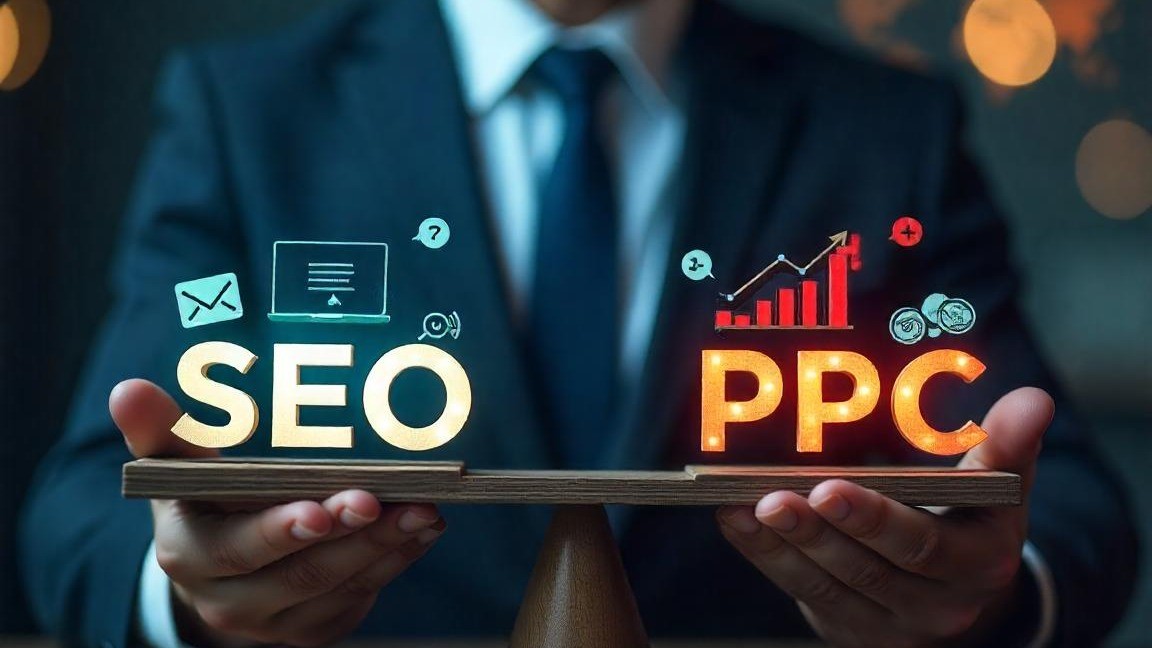
Comparing SEO and PPC
SEO and PPC should be evaluated using relevant business metrics, including traffic quality, conversion rates, customer acquisition costs and revenue.
SEO is generally a longer-term investment, while paid advertising can support immediate promotional requirements.
Combining SEO and Paid Advertising
Businesses can use paid campaigns to promote products while developing organic visibility through content and technical optimisation.
Search data from advertising campaigns can also help identify customer queries and product interests for future SEO activities.
Strategy Based on Business Size and Budget
Small online stores may prioritise their most important categories and product pages before expanding optimisation across the entire catalogue.
Larger retailers may require broader technical support, content management and ongoing performance monitoring.
Measuring the Performance of E-commerce SEO Services
Organic Traffic Through Google Analytics 4
Google Analytics 4 helps businesses understand website visits and user engagement.
Organic traffic can be evaluated alongside product interactions, add-to-cart events and completed purchases.
Keyword Rankings and Search Visibility
Monitoring relevant keyword rankings provides insight into changes in search performance.
Businesses should track important product and category keywords rather than depending on a single ranking position.
Google Search Console Performance
Google Search Console provides information about impressions, clicks, average positions and click-through rates.
These metrics help identify pages that receive search visibility but may need more effective titles or descriptions.
Product Engagement and Conversion Rates
Product engagement measurements help businesses understand how visitors interact with product pages.
Metrics can include product views, product selections and other meaningful interactions.
Add-to-Cart Actions and Purchases
Tracking add-to-cart events and completed purchases helps identify where customers progress or leave during the shopping process.
Organic Revenue Measurement
Organic revenue connects search performance with actual sales outcomes.
Businesses should evaluate revenue alongside organic traffic and conversion rates to understand the commercial value of search visibility.
High-Performing Products and Categories
Identifying pages that attract valuable traffic helps businesses prioritise future optimisation.
High-performing pages can be reviewed for opportunities to improve related categories, product recommendations and internal links.
Choosing the Right E-commerce SEO Agency in India
Industry Experience and E-commerce Expertise
An experienced agency should understand the requirements of online stores, including product optimisation, category architecture, technical SEO and large website management.
Previous SEO Projects and Case Studies
Reviewing previous projects helps businesses understand an agency's approach and experience.
Case studies should explain the challenges, optimisation activities and measurable outcomes without relying on unsupported ranking claims.
Keyword Research and Technical SEO Process
A reliable strategy should include keyword mapping, competitor analysis, indexing reviews, canonicalisation and website performance checks.
Product and Category Page Optimisation
The agency should explain how it plans to improve product descriptions, metadata, category content and internal linking.
SEO Packages and Deliverables
Businesses should compare the actual work included in different service packages.
Deliverables may include keyword research, technical audits, content optimisation, reporting and ongoing website improvements.
Reporting and Performance Tracking
Reports should connect SEO activities with measurable results, including organic traffic, impressions, clicks, conversions and revenue.
Avoiding Unrealistic Ranking Guarantees
No agency can guarantee a particular Google ranking.
Businesses should avoid manipulative link-building schemes, automated backlink services and promises of instant results.
Common E-commerce SEO Mistakes That Limit Organic Growth
Duplicate Product Descriptions
Using identical descriptions across several products reduces content uniqueness.
Each important product page should provide accurate information about the specific item.
Ignoring Category Page Optimisation
Category pages are valuable entry points for shoppers. Neglecting their content, metadata and internal links can limit organic visibility.
Targeting Keywords Without Purchase Intent
High search volume does not automatically mean a keyword will generate sales.
Businesses should prioritise relevance and search intent when selecting target phrases.
Neglecting Mobile Performance
Poor mobile navigation, slow-loading pages and difficult checkout processes can create unnecessary barriers for smartphone users.
Poor Management of Out-of-Stock Products
Removing every unavailable product page immediately may result in lost search visibility and broken links.
Businesses should decide whether to retain, redirect or remove pages based on product availability, replacement options and continuing customer value.
Ignoring Product Schema and Google Merchant Center
Incorrect structured data and incomplete product information can limit opportunities for product visibility.
Businesses should maintain accurate product information and validate schema implementation.
Building Low-Quality Backlinks
Unrelated links, automated link schemes and manipulative backlink practices can create risks without providing meaningful referral value.
Link acquisition should focus on relevance and genuine authority.
Publishing Content Without Search Intent Research
Content should address actual customer needs.
Publishing repetitive articles without considering product relevance or search intent is unlikely to create meaningful value.
Long-Term Business Growth Through Professional E-commerce SEO Services
Sustainable Organic Search Visibility
Consistent optimisation helps online stores develop a stronger search presence across relevant product categories and customer searches.
Attracting Customers With Purchase Intent
Targeting relevant commercial and transactional searches helps businesses reach visitors who are actively researching or purchasing products.
Improving Product Discoverability
Organised product pages, useful category descriptions and effective internal linking make it easier for customers to find suitable items.
Brand Awareness and Customer Trust
Informative content and accurate product information help businesses build credibility among potential buyers.
Organic Sales Opportunities
SEO can contribute to more qualified website visits, product enquiries and online purchases.
Performance should be measured using meaningful business outcomes rather than rankings alone.
Scalable Digital Marketing Strategy
As product catalogues expand, SEO strategies should adapt to new categories, customer interests and changing search behaviour.
Regular audits and performance reviews help maintain website quality as the business grows.
Conclusion
Building a successful online store requires a combination of product quality, customer experience and effective digital visibility. Businesses must ensure that potential buyers can discover their products, understand their benefits and complete purchases without unnecessary difficulties. A consistent optimisation strategy supports these objectives through better content, technical improvements, organised navigation and relevant search targeting.
Following an E-commerce SEO Guide to Grow Online Sales helps businesses develop a structured approach to product visibility, customer engagement and long-term growth. Investing in e-commerce seo services can help Indian online retailers attract relevant visitors, improve search presence and create sustainable opportunities for online sales.
Businesses looking for an experienced digital solutions partner can explore the services offered by Voicene Technologies LLP through its SEO and digital marketing services and contact the team to discuss their requirements.
Frequently Asked Questions
Recent Blogs