Why Your Business Needs an AI Software Development Company in 2027
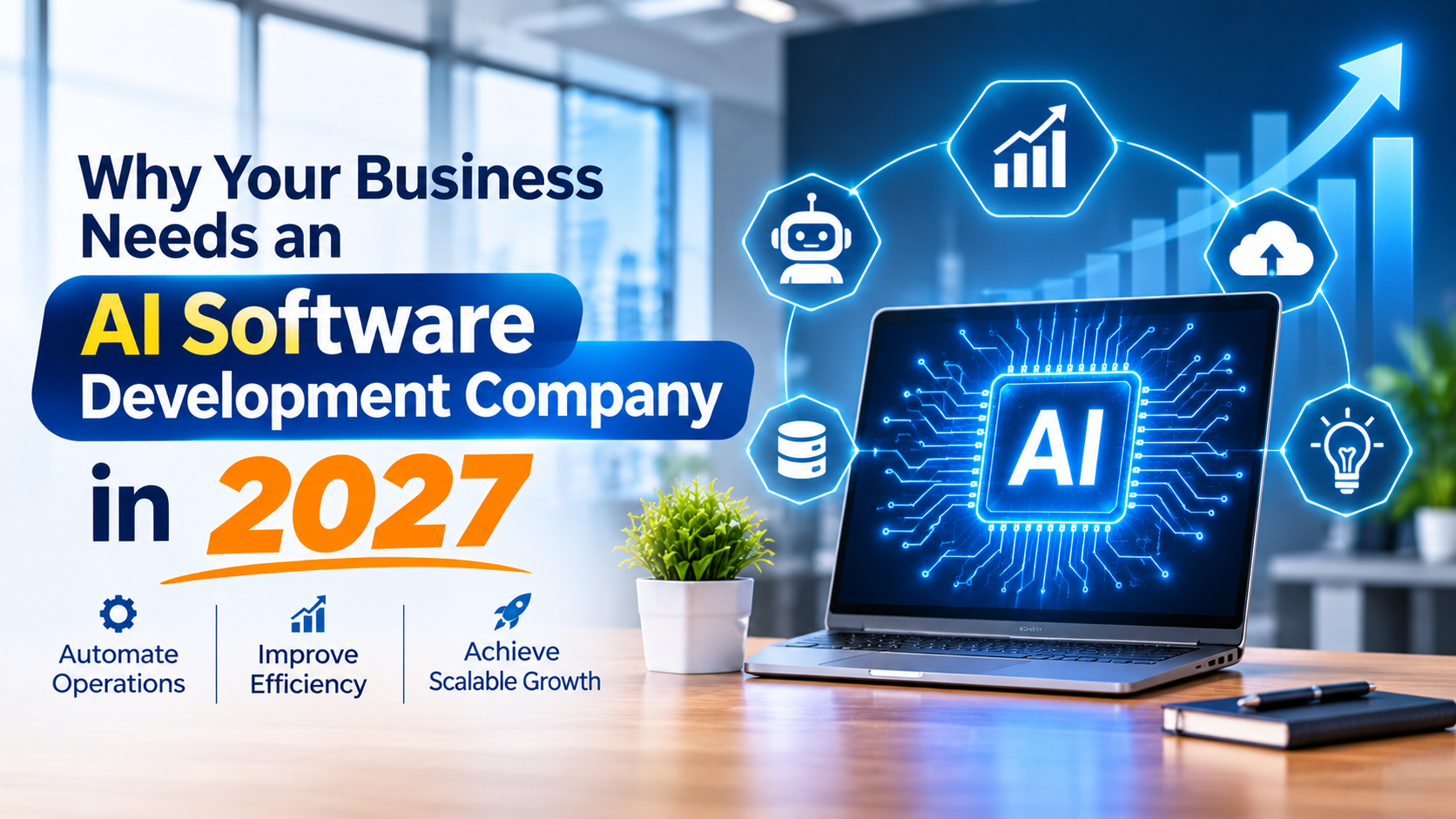
Artificial intelligence is changing how businesses operate, communicate with customers, and make important decisions. From automating repetitive tasks to analysing large amounts of business data, AI is helping organisations improve efficiency and remain competitive. In 2027, adopting AI will become increasingly important for Indian startups, small businesses, and established enterprises. Implementing the right AI Technologies for Business Growth can help companies reduce manual workloads, improve customer experiences, and identify new business opportunities. However, successful AI adoption requires more than purchasing ready-made software. Businesses need solutions that match their operational requirements, existing systems, and long-term objectives. This is where an experienced AI software development company becomes valuable.
The Growing Importance of AI in Indian Businesses
How AI Is Transforming India's Business Landscape
Indian businesses are increasingly exploring AI to improve productivity and deliver better services. AI-powered applications can analyse customer behaviour, identify patterns, automate workflows, and support faster decision-making. These capabilities allow businesses to manage operations more efficiently while responding to changing market demands.
Why Indian Startups and SMEs Are Adopting AI
Startups and small businesses often operate with limited resources. AI helps them automate customer support, manage enquiries, organise information, and reduce repetitive administrative work. Instead of increasing operational costs through manual processes, businesses can use intelligent applications to handle routine activities.
The Role of AI in Digital Business Transformation
Digital transformation involves improving business processes through modern technologies. AI supports this transformation by connecting business applications, analysing information, and automating tasks. When integrated correctly, it helps organisations create more responsive and efficient operations.
Emerging AI Trends Indian Businesses Should Watch in 2027
Businesses should pay attention to generative AI, agentic AI, predictive analytics, natural language processing, computer vision, and intelligent automation. These technologies are creating opportunities across customer service, finance, healthcare, manufacturing, retail, and logistics.
Key Signs Your Business Needs AI Software Development Services
How can you identify whether your organisation is ready for AI? The following signs indicate that introducing intelligent software may improve your business operations.
Repetitive Manual Tasks Are Slowing Down Operations
If employees spend considerable time entering information, preparing reports, processing orders, or responding to routine enquiries, automation can help. AI-powered systems can handle repetitive activities and allow employees to focus on higher-value responsibilities.
Your Business Struggles With Data Management and Analysis
Businesses generate information through websites, customer interactions, transactions, and internal applications. AI can process large datasets, identify trends, and provide useful insights that support business planning.
Customer Expectations Are Increasing
Customers expect quick responses, personalized recommendations, and convenient digital experiences. AI chatbots and intelligent customer service applications can provide assistance beyond regular working hours.
Existing Software Cannot Support Business Growth
Traditional applications may struggle when business requirements become more complex. Custom AI solutions can extend existing software capabilities and support increasing workloads without requiring a complete system replacement.
Your Competitors Are Already Adopting AI Technologies
Businesses that introduce automation and intelligent analytics can improve operational efficiency and respond to market changes faster. Evaluating AI opportunities early can help organisations maintain their competitive position.
How an AI Software Development Company Helps Businesses Grow
An experienced development partner understands how to connect AI technology with practical business requirements. Rather than implementing unnecessary features, the development process should focus on measurable improvements.
Develop Custom AI Solutions for Business Requirements
Every organisation has different operational challenges. Custom development allows businesses to build applications around their workflows, customer requirements, and industry needs. Solutions may include intelligent dashboards, automated reporting systems, document processing applications, and AI-powered business platforms.
Automate Repetitive Business Processes
AI-powered automation can reduce manual work across departments. For example, an organisation can automate invoice processing, appointment scheduling, customer enquiry management, and document classification. Employees can then spend more time on customer relationships and strategic activities.
Improve Decision-Making With AI-Powered Analytics
AI analytics tools examine business data to identify patterns, forecast demand, and highlight potential operational problems. Managers can use these insights to plan inventory, evaluate marketing performance, understand customer behaviour, and make informed decisions.
Enhance Customer Experience With Intelligent Applications
AI-powered applications can provide personalised recommendations, answer frequently asked questions, and guide customers through purchasing processes. Natural language processing also allows applications to understand and respond to customer queries more effectively.
Integrate AI Into Existing Business Systems
Businesses do not always need to replace their current software. AI can be integrated with CRM platforms, ERP applications, websites, databases, and other business tools through suitable APIs and integration methods. This approach helps organisations improve existing technology investments.
Top AI Software Solutions Indian Businesses Should Consider in 2027
The right solution depends on business objectives, available data, customer expectations, and operational requirements. Some useful applications include:
AI Chatbot and Virtual Assistant Development
AI chatbots can answer customer questions, collect enquiries, provide product information, and direct users to the appropriate department. Virtual assistants can also support employees with internal information and routine tasks.
AI-Powered Customer Relationship Management (CRM)
AI-enabled CRM applications help businesses understand customer behaviour, organise leads, identify sales opportunities, and improve follow-up activities. Sales teams can prioritise prospects based on available customer information.
Predictive Analytics and Business Intelligence
Predictive analytics uses historical and current data to identify possible future outcomes. Businesses can apply it to sales forecasting, customer retention, inventory planning, and financial analysis.
AI-Based Workflow and Process Automation
Intelligent workflow systems connect different business activities and reduce repetitive manual processes. They can automatically route documents, update records, trigger notifications, and support approval workflows.
Generative AI Applications for Business Operations
Generative AI can assist with drafting business documents, summarising reports, preparing product descriptions, and retrieving information from internal knowledge sources. Businesses should establish review procedures to check accuracy before using generated information.
AI-Powered Recommendation and Personalisation Systems
Retailers and e-commerce businesses can use recommendation engines to suggest relevant products based on customer interests, browsing activity, and purchase history. Personalisation can make digital shopping experiences more relevant.
Benefits of Hiring an AI Software Development Company in India
Why should a business work with a specialised development partner instead of managing the entire implementation independently?
Access to Skilled AI Developers and Technical Expertise
AI projects require knowledge of software engineering, machine learning, data processing, cloud infrastructure, and application integration. An experienced development team can help select appropriate technologies and build solutions that match business requirements.
Cost-Effective Custom AI Development
Working with an Indian development company can provide access to technical expertise and flexible project engagement options. Businesses can plan development according to their budgets instead of investing in unnecessary infrastructure or features.
Scalable Solutions for Growing Businesses
A properly designed AI application should support increasing users, data volumes, and operational demands. Scalable architecture allows businesses to introduce additional features as their requirements change.
Faster Development and Implementation
An organised development process helps businesses move from planning to implementation more efficiently. Requirements analysis, prototyping, testing, and deployment reduce the risk of building software that does not solve the original problem.
Ongoing Technical Support and Maintenance
AI applications need regular monitoring, updates, security improvements, and performance evaluation. Continuous support helps maintain application reliability as business requirements and technology change.
Custom AI Software Development vs Ready-Made AI Tools
Choosing between custom software and an existing AI platform depends on the complexity of your requirements.
Understanding Custom AI Software Development
Custom AI development involves creating an application specifically for an organisation. The development team considers business workflows, data sources, integration requirements, security needs, and future expansion.
Advantages of Ready-Made AI Applications
Ready-made tools are useful when businesses need standard features quickly. They often offer subscription-based access, preconfigured functionality, and straightforward implementation. However, their customisation options may be limited.
Differences in Flexibility, Scalability, and Integration
| Factor | Custom AI software | Ready-made AI tools |
|---|---|---|
| Customisation | Built around business needs | Limited by available features |
| Integration | Can support specific systems | Depends on vendor integrations |
| Scalability | Designed for future requirements | Depends on subscription and platform |
| Initial investment | Usually higher | Often lower |
| Maintenance | Requires ongoing technical support | Usually managed by the provider |
Which AI Development Approach Is Right for Your Business?
Choose custom development when your organisation has specialised workflows, complex integrations, or unique data requirements. Ready-made tools are suitable for common business tasks that do not require extensive customisation. A hybrid approach can also combine existing AI platforms with custom applications.
Industries in India That Can Benefit From AI Software Development
AI adoption is not limited to technology companies. Different industries can use intelligent applications to improve their services and internal processes.
Healthcare and Medical Services
Healthcare organisations can use AI for administrative automation, appointment management, medical documentation support, and analysis of clinical information. Any clinical application must undergo appropriate validation and professional oversight.
Banking and Financial Services
Financial institutions can explore AI for fraud detection, customer support, transaction monitoring, risk assessment, and document processing. Security and regulatory requirements must remain central to implementation.
Retail and E-commerce
Retail businesses can use recommendation systems, demand forecasting, customer segmentation, and automated support to improve shopping experiences and inventory management.
Manufacturing and Industrial Operations
Manufacturers can apply computer vision for quality inspection, predictive maintenance for equipment, and intelligent analytics for production planning.
Education and E-learning
Educational platforms can use AI to recommend learning materials, support student enquiries, automate administrative tasks, and personalise learning experiences.
Logistics and Transportation
Logistics companies can explore AI for route planning, delivery forecasting, fleet monitoring, demand prediction, and operational reporting.
How to Choose the Right AI Software Development Company in India
Selecting the right technology partner is an important decision because the quality of development directly affects application performance, security, and long-term business value.
Evaluate Technical Expertise and AI Development Experience
Look for developers with experience in machine learning, generative AI, natural language processing, cloud computing, API development, and software integration. The company should understand how these technologies solve real business problems.
Review Previous Projects and Client Case Studies
Examine previous projects, industry experience, and implementation examples. Ask how the development team approached technical challenges and measured project outcomes.
Check Customisation and Integration Capabilities
Choose a partner that can develop applications around your requirements and connect them with existing business systems. Integration capabilities are particularly important when working with multiple software platforms.
Understand Data Security and Privacy Practices
AI applications may process sensitive customer and business information. Review the company's data handling procedures, access controls, encryption practices, and security testing processes.
Businesses handling personal information in India should also consider applicable requirements under the Digital Personal Data Protection Act and the DPDP Rules. Refer to the Digital Personal Data Protection Act, 2023 and the Government's DPDP Rules announcement.
Compare Development Costs and Project Timelines
Request a detailed project proposal that explains development stages, deliverables, estimated timelines, infrastructure requirements, and maintenance expenses. Compare the overall project value rather than selecting a company based only on the lowest quotation.
Evaluate Post-Launch Support and Maintenance
AI applications require ongoing monitoring and improvements. Check whether the development partner provides technical support, bug fixes, model updates, performance optimisation, and future enhancements.
Common Challenges Businesses Face When Adopting AI
Although AI provides several opportunities, successful implementation requires proper planning.
Data Quality and Availability
AI systems depend on reliable information. Incomplete, outdated, or inconsistent datasets can affect application performance. Businesses should organise, clean, and validate their data before implementation.
Integration With Existing Software
Connecting AI applications with older systems can create technical challenges. Proper API planning, compatibility testing, and system architecture help minimise integration problems.
Data Privacy and Security Concerns
Organisations must protect customer information and business records. Appropriate access controls, secure storage, encryption, and data governance practices should be included throughout the development process.
Employee Training and AI Adoption
Employees may need training to use new applications effectively. Introducing AI gradually, providing practical guidance, and explaining how automation supports their work can improve adoption.
Managing AI Implementation Costs
Development, cloud infrastructure, data preparation, integration, and ongoing maintenance can increase project expenses. Businesses should prioritise high-value use cases and introduce additional features in phases.
What to Expect From AI Software Development in 2027 and Beyond
The AI landscape continues to evolve, creating new possibilities for business applications.
Increased Adoption of Generative AI
Generative AI applications will continue supporting content creation, document processing, knowledge management, and customer communication. Businesses will increasingly explore connecting these capabilities with their internal information systems.
Growth of Agentic AI and Autonomous Workflows
Agentic AI systems can perform multi-step tasks using defined goals, tools, and instructions. Businesses may use them to support workflow coordination, information retrieval, and operational processes. Human approval should remain part of important decisions and high-risk activities.
More Personalised Customer Experiences
AI-powered applications can use customer preferences and interaction history to provide relevant recommendations, targeted communication, and personalised digital experiences.
AI-Powered Business Decision-Making
Advanced analytics will help organisations understand business performance, forecast demand, and identify potential risks. Managers can use these insights alongside human expertise when making strategic decisions.
Greater Focus on Responsible and Secure AI
Businesses will need to pay closer attention to accuracy, transparency, privacy, security, and accountability. The NIST AI Risk Management Framework provides useful guidance for identifying and managing AI-related risks.
How Much Does AI Software Development Cost in India?
There is no single fixed price for AI development. The total investment depends on the type of application, technical complexity, data requirements, and integration needs.
Factors That Influence AI Development Costs
Important cost factors include:
- Application complexity and required features.
- Machine learning model development or customisation.
- Data collection, preparation, and processing.
- Cloud hosting and computing infrastructure.
- Third-party API and software licensing fees.
- Security testing and deployment requirements.
- Ongoing maintenance and technical support.
Custom AI Development vs Subscription-Based AI Tools
Subscription-based applications generally have lower initial implementation requirements because the software is already available. Custom AI applications require more planning and development but can provide greater control over functionality and integration.
Development, Integration, and Maintenance Expenses
Businesses should consider the complete project lifecycle. Initial development is only one part of the investment. Infrastructure, model monitoring, software updates, security improvements, and technical support can also contribute to ongoing expenses.
How to Estimate the ROI of an AI Software Project
Start by identifying the business problem and measuring current performance. For example, calculate how much employee time is spent on repetitive tasks, how long customer enquiries take to resolve, or how much manual effort is required to prepare reports.
Compare these baseline measurements with the expected improvements after implementation. This provides a practical way to evaluate the return on investment.
Partner With the Right AI Software Development Company for Your Business
AI helps Indian businesses improve efficiency, automate tasks, and enhance customer experiences. Choosing the right development partner ensures secure, scalable, and effective AI solutions. In 2027, businesses can strengthen their digital capabilities by investing in the right AI strategy and AI software development services.
Explore Voicene Technologies LLP for digital solutions tailored to your business needs. Contact our team to discuss your requirements.
Frequently Asked Questions
Recent Blogs